
Newark, New Jersey, is a city with a complex relationship with its water. While recent years have seen massive municipal efforts to replace lead service lines in the public sector, a growing number of homeowners in the North and West Wards—particularly those on private wells or older shared lines—are facing a different, more insidious challenge: water corrosivity.
Unlike a broken pipe that causes a flood, corrosion is a silent process. It happens molecule by molecule, day by day. By the time a Newark resident notices a metallic taste or a blue-green stain in their sink, the damage to their plumbing and their health may already be significant. For many, the lesson is being learned “the hard way”—through failed real estate inspections, expensive plumbing repairs, and unexpected health scares.
The Science of “Hungry” Water: Why Newark Wells Corrode
Corrosion in well water isn’t about the water being “dirty”; it’s about the water’s chemical balance. In the Newark Basin, groundwater often lacks certain minerals like calcium and magnesium that act as natural buffers. When water is “soft” and slightly acidic (with a low pH), it becomes aggressive—or “hungry.”
Because the water is undersaturated with minerals, it seeks to balance itself by dissolving the metal from whatever it touches. In a typical Newark home, this means the water is leaching copper from your pipes, lead from old solder, and even zinc from brass fixtures. According to the U.S. Geological Survey (USGS), corrosive groundwater is a widespread issue in the Northeast, particularly in sedimentary bedrock formations like those found beneath Newark.
Physical Red Flags: How to Spot Corrosion Early
Newark homeowners often miss the early signs of corrosion because they aren’t looking for them. However, your home’s fixtures are constantly “talking” to you about the water quality.
- Blue-Green Stains: If you see turquoise streaks in your white porcelain tubs or sinks, your water is actively dissolving your copper pipes.
- Metallic Taste: A sharp, bitter, or “penny-like” flavor—especially in the morning—is a sign that metals have leached into the water while it sat in your pipes overnight.
- Pinhole Leaks: Small, crusty “volcanoes” of white or green powder on your basement pipes are the precursors to a burst pipe.
- Thinning Pipe Walls: If your water pressure seems to be dropping for no reason, it could be that corrosion has created a buildup of scale or has structurally weakened the delivery lines.
If you notice these signs, a professional maintenance check is no longer optional; it is a necessity to prevent a catastrophic plumbing failure.
The Lead Connection: A Critical Health Risk
Newark’s history is etched in its infrastructure. Many homes built before the late 1980s contain copper piping joined by lead-based solder. While the water coming out of the aquifer might be lead-free, the corrosive nature of the water causes lead to flake off the joints and enter the drinking supply.
The NJDEP has emphasized that lead exposure, particularly for children, has no safe level. It can lead to developmental delays, behavioral issues, and long-term kidney damage. For homeowners in this location, testing for “total lead” is the only way to know if your corrosive water is turning your plumbing into a health hazard.
The “Filter Fallacy” in Corrosive Environments
A common mistake Newark residents make is installing a “one-size-fits-all” filter from a big-box store. While these filters might improve the taste, they often fail to address the underlying acidity. In fact, some filtration systems, like Reverse Osmosis, can actually make water more corrosive by removing the few buffering minerals that were present.
This is why a professional services provider doesn’t just suggest a filter; they suggest a neutralizer. A calcite neutralizer adds a controlled amount of calcium back into the water, raising the pH and “satisfying” the water’s hunger before it ever reaches your copper pipes.
Economic Impact: The Cost of Ignoring the Signs
Learning about corrosion “the hard way” usually involves a large bill.
- Plumbing Replacement: Re-piping a Newark home with PEX or new copper can cost anywhere from $5,000 to $15,000.
- Appliance Failure: Corrosive water eats through the heating elements in water heaters and the internal components of dishwashers and washing machines, cutting their lifespan in half.
- Real Estate Delays: Under the New Jersey Private Well Testing Act, if your water is found to be leaching high levels of lead or copper during a sale, you may be forced to install an expensive remediation system before the title can transfer.
By keeping up with your water’s health through a dedicated blog, you can stay informed on the latest NJ remediation standards and avoid these financial pitfalls.
The Importance of “First Draw” Testing
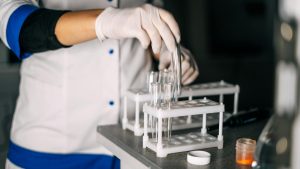
At Olympian Well Water Testing, we emphasize that testing for corrosion requires a specific protocol. Because the leaching of metals happens while the water is stagnant, the best sample is the “First Draw”—the very first liter of water that comes out of the tap after it hasn’t been used for 6 to 8 hours.
If you only test “flushed” water, you are testing the water from the well, which might look perfect. But the water your family drinks first thing in the morning is the water that has been sitting in contact with your pipes all night. That is where the danger lies.
Proactive Steps for Newark Residents
If you suspect your well water is corrosive, do not wait for a leak to confirm it.
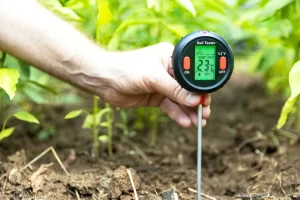
- Schedule a pH and Mineral Test: Determine exactly how “hungry” your water is.
- Inspect the Wellhead: Ensure no surface water is entering and throwing off the chemical balance.
- Install a Neutralizer: Balance the pH at the point of entry to protect every pipe in the house.
- Flush Your Lines: Until a permanent solution is installed, run your cold water for 2-3 minutes every morning to clear out the stagnant, metal-heavy water.
For a deeper dive into your home’s specific needs, you can always reach out via our contact page to speak with a specialist who understands Newark’s unique hydrogeology.
Conclusion: Purity is a Balance
The lesson many Newark homeowners are learning is that water quality is about more than just the absence of bacteria. It is about chemistry. A well that provides “pure” water can still destroy a home’s infrastructure if that water is chemically aggressive.
Don’t wait for the blue stains to appear or the pipes to start leaking. By understanding the corrosivity of Newark’s groundwater and taking proactive steps to neutralize it, you can protect your home, your investment, and most importantly, your family’s health.