For most homeowners with a private well, the sight of a service truck in the driveway is a relief. Whether you’re dealing with a failed submersible pump, a cracked well cap, or a loss of water pressure, having a professional on-site means the lifeblood of your home—your water—will soon be restored.
However, there is a hidden consequence to well repairs that many residents overlook. The very act of opening a well, pulling out a pump, or replacing a section of pipe introduces a host of environmental contaminants into a previously sealed system. It is a common, yet startling, reality: bacteria levels can spike dramatically immediately following well servicing or repairs. If you’ve recently had work done on your well system, “business as usual” could be a risk to your family’s health. Understanding why this spike occurs and how to properly remediate it is an essential part of responsible homeownership.
The Open System Problem: How Contamination Enters
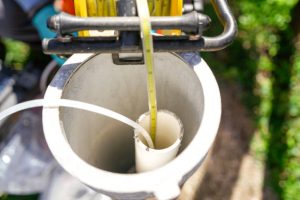
A properly functioning well is a closed system. It is designed to draw water from deep within an aquifer, protected from the surface world by layers of soil, rock, and a steel or plastic casing. When a technician arrives to perform services, that seal is broken.
There are three primary ways bacteria enter the system during a repair:
- Direct Exposure: When the well cap is removed, the interior of the well is exposed to the open air. Dust, debris, and even small insects can fall into the water column.
- Tool and Equipment Transfer: The tools, pipes, and replacement pumps used by technicians have been on the truck, on the ground, and in the hands of the workers. Unless these items are surgically sterilized before being lowered into the well, they carry microscopic bacteria into the aquifer.
- Biofilm Disturbance: Over years of operation, a thin layer of harmless minerals and “iron bacteria” can form on the inside of the pipes. When a pump is pulled or pipes are jarred during a repair, this biofilm is disturbed, releasing a surge of bacteria into the water flow.
Total Coliform vs. E. coli: What’s the Risk?
Following a repair, a well will almost always fail a “Total Coliform” test if it hasn’t been properly treated. Total Coliform is a broad category of bacteria found in soil and surface water. While most coliform strains don’t cause acute illness, they are “indicator organisms.” Their presence proves that the well’s sanitary barrier has been breached.
The greater concern is the introduction of E. coli or other pathogens. If a technician’s gloves were contaminated or if surface runoff entered the open well head, the water could become a vector for gastrointestinal illness. According to the Centers for Disease Control and Prevention (CDC), any time a well is opened for repair, it should be considered “unsanitary” until a laboratory test proves otherwise.
The “Post-Repair” Protocol: Shock Chlorination
A reputable well contractor will usually perform a “shock chlorination” after completing a repair. This involves pouring a concentrated chlorine solution (usually bleach) into the well to kill any bacteria introduced during the work.
However, shock chlorination is not a “set it and forget it” solution. For it to be effective:
- The chlorine must be circulated through the entire home plumbing system until it can be smelled at every tap.
- The solution must sit in the pipes for at least 12 to 24 hours (the “contact time”).
- The system must then be thoroughly flushed until the chlorine odor is completely gone.
Even with this process, bacteria can sometimes hide in “dead ends” of the plumbing or within the pressure tank. This is why a professional maintenance check and a follow-up lab test are non-negotiable.
The Importance of Timing: When to Test
One of the biggest mistakes homeowners make is testing the water too soon after a repair. If you test while there is still residual chlorine in the lines, you will get a “false negative.” The chlorine will kill the bacteria in the sample bottle, but it doesn’t mean the well is actually clean once the chlorine dissipates.
At Olympian Well Water Testing, we recommend waiting 3 to 7 days after the chlorine has been completely flushed from the system before taking a formal sample. This “waiting period” allows any surviving bacteria to regrow to detectable levels, ensuring that your “pass” result is a true reflection of the water’s safety.
Regional Concerns: New Jersey’s Unique Landscape
In various New Jersey locations, the risk of post-repair bacteria spikes is heightened by local geography. In areas with fractured bedrock, such as the Highlands, a shock chlorination might “push” bacteria into rock crevices where the chlorine can’t reach, only for them to migrate back into the well a week later.
Furthermore, if your well repair was necessitated by a flood or heavy storm, the surrounding soil is likely saturated with contaminants. In these cases, a simple repair isn’t enough; you need a comprehensive water quality analysis to ensure the aquifer itself hasn’t been compromised. We frequently update our blog with seasonal warnings for New Jersey well owners, as weather patterns significantly impact microbial stability.
Real Estate Implications: The Closing Crisis
If you are in the middle of a home sale and require a well repair, a bacteria spike can be a disaster. Under the New Jersey Private Well Testing Act (PWTA), a “Fail” for coliform will halt a closing immediately.
Sellers often find themselves in a loop: they fix the pump, shock the well, test the water immediately, and fail again because the chlorine didn’t reach every corner of the system or because they didn’t wait long enough for a valid sample. By following a strict post-repair testing protocol, you can avoid these delays and provide the buyer with a certified, clean report.
A Checklist for Homeowners After Well Work
If a service truck has just left your property, follow these steps to ensure your water is safe:
- Do Not Drink the Water: Until you have a passing lab result, use bottled water for drinking, cooking, and brushing teeth.
- Confirm the Shock: Ask your contractor if they performed a shock chlorination and how much chlorine was used.
- Flush the System: Once the contact time has passed, run your outdoor hoses to flush the bulk of the chlorine out of the well before running it through your indoor drains (to protect your septic system).
- Wait and See: Wait at least 72 hours after the chlorine smell is gone before scheduling a test.
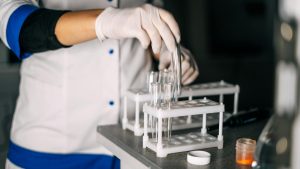
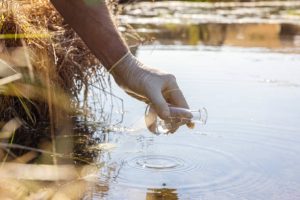
- Professional Verification: Use a contact form to schedule a certified laboratory test. A DIY “test strip” cannot provide the accuracy needed to detect low-level bacterial colonies.
Conclusion: Safety After the Service
A well repair is only half the job. The mechanical fix restores the flow of water, but only a laboratory test restores the safety of that water. Bacteria are microscopic, resilient, and opportunistic; they take advantage of every moment your well is open to the world.
Don’t let a successful pump replacement lead to an unsuccessful health outcome. By acknowledging the reality of post-repair bacteria spikes and committing to professional testing, you can ensure that your well remains a source of health, not a hidden hazard.