
Filters Won’t Help If You’re Testing the Raw Water
In the world of New Jersey real estate, there is a specific moment of panic that many sellers experience. You have a beautiful home, a motivated buyer, and a high-end, multi-stage water filtration system that you’ve maintained for years. You’re confident that your water is as pure as it gets. Then, the technician from the laboratory arrives to conduct the state-mandated NJ Private Well Testing Act (PWTA) test.
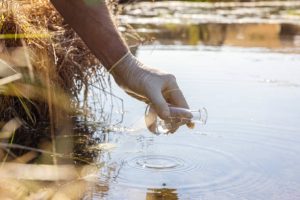
To your surprise, the technician bypasses your expensive filters, heads straight for a spigot near the pressure tank, and collects what is known as a raw water sample. A week later, the results come back with a failure for arsenic or gross alpha radiation.
The immediate reaction is often one of frustration: “Why does the failure count if my filter removes it?” The answer lies in the specific legal and safety requirements of New Jersey law. Understanding the “Raw Water Rule” is essential for anyone buying or selling a home in our region, as it reveals that a filter is a secondary defense, not a substitute for a clean aquifer.
What Exactly is “Raw Water”?
In the context of services provided by a certified lab, “raw water” refers to the water exactly as it exists in the ground, before it has been altered by any softeners, neutralizers, or carbon blocks.
When a well is drilled, it taps into a specific geological formation. That water carries a chemical “fingerprint” dictated by the soil and rock it sits in. The state of New Jersey requires testing of this raw source because the property is being sold with a well, not just a filtration system. Filters can be turned off, bypassed, or left unmaintained; the well, however, is a permanent fixture of the real estate.
The Legal Logic: Why New Jersey Bypasses Your Filter
The PWTA was designed to protect the consumer—the buyer. The state’s logic is that a buyer deserves to know the true condition of the natural resource they are purchasing.
If a house has a massive arsenic problem in the ground, but a brand-new filter is masking it, a buyer might move in without realizing the high cost and maintenance required to keep that water safe. Filters eventually fail. Cartridges clog. Resins exhaust. If the underlying “raw” water is hazardous, the state believes that fact must be disclosed as part of the public record for that location.
Therefore, for the purposes of a real estate closing, the filter essentially does not exist during the initial testing phase. If the raw water fails, the well fails—period.
The Conflict: Raw Water Failures vs. Treated Water Safety
This creates a common conflict in places like Bergen, Morris, and Passaic counties, where naturally occurring minerals are prevalent. A seller might have a perfectly functioning Reverse Osmosis system that brings arsenic levels from 20 ppb down to 0 ppb.
However, because the PWTA samples must be taken at the “untreated” source:
- The lab report will show a “Fail” for Arsenic.
- The mortgage lender may refuse to fund the loan based on that report.
- The seller is often forced to provide proof that the filter is effective, or in some cases, upgrade the system to meet modern state requirements.
This is a recurring theme we explore on our blog. The “Raw Water Rule” ensures that no one can hide a contaminated aquifer behind a temporary filtration “band-aid.”
Common Contaminants That Bypass the “Filter Confidence”
Many homeowners believe their “whole-house” sediment or carbon filter protects them from everything. However, many NJ contaminants are dissolved solids that require very specific chemistry to remove—and they will always show up in a raw water test:
- Arsenic: A tasteless, odorless heavy metal common in the Piedmont region. Standard carbon filters rarely touch it.
- Uranium: A radioactive element found in Northern NJ bedrock. It requires specialized ion-exchange resins.
- VOCs (Volatile Organic Compounds): Industrial chemicals that can migrate through groundwater. While carbon helps, they are often detected in raw samples at levels that trigger a state failure.
- PFAS: The “forever chemicals” that have recently become a mandatory part of the PWTA.
According to the Environmental Protection Agency (EPA), these primary contaminants are health risks that require verified, consistent removal—which is why the state insists on knowing the raw concentration first.
The “Post-Treatment” Loophole: How to Pass After a Raw Failure
If your raw water fails, does that mean the sale is over? Not at all. It simply shifts the process into a second phase.
Once a raw water failure is documented, the next step is usually a Post-Treatment Sample. This is where the lab does test the filtered water. If the treated sample shows that the contaminants have been reduced below the state’s Maximum Contaminant Level (MCL), the closing can usually proceed.
However, there is a catch: The “Fail” on the raw water report remains part of the permanent record for that property. The buyer will likely demand a guarantee that the filtration system will be maintained, or they may ask for a credit to ensure the maintenance is covered for the first few years of their residency.
Why “Testing Early” is the Best Strategy
Because of the Raw Water Rule, sellers should never wait for the buyer’s inspector to test the well. If you test your own raw water before listing the home, you can:
- Identify the Failure Privately: Know exactly what the state is going to find.
- Service the System: Ensure your filters are fresh so that when the “Treated” sample is eventually required, it passes with flying colors.
- Disclose with Confidence: You can tell buyers, “The raw water has elevated iron, but we have a certified system in place that brings it to zero.”
At Olympian Well Water Testing, we help homeowners navigate this “Raw vs. Treated” dynamic every day. We ensure that samples are taken correctly at the right ports so there is no confusion at the lab.
Steps to Take Before Your PWTA Test
If you have a filtration system and are preparing for a sale, follow this checklist to avoid surprises:
- Locate Your Bypass: Ensure the technician can access the water before it hits any tanks or filters. If your plumbing is entirely sealed, you may need a plumber to install a sampling spigot.
- Check the Brine Tank: If you have a softener, make sure it’s full of salt. Even though we test the raw water, a failure will lead to a treated test where the softener must be at 100%.
- Review Old Reports: Look at previous tests to see if any minerals were “borderline.”
- Consult an Expert: Use our contact page to ask about the specific requirements for your county.
Conclusion: Respect the Source
The “Raw Water Rule” can be a headache for sellers, but it is a fundamental part of keeping New Jersey’s water supply transparent. A filter is a wonderful tool for protecting your family’s health, but it doesn’t change the reality of the ground beneath your home.
By understanding that the state tests the well—not just the tap—you can go into your real estate transaction with your eyes open. Knowledge of your raw water quality allows you to maintain your treatment systems more effectively and ensures that when it comes time to sell, your “clear” water is backed by solid science.