
In the fast-paced New Jersey real estate market, a “closing” is the finish line everyone is racing toward. For properties with private wells, however, there is a significant hurdle that can appear just as you think you’re in the home stretch: the New Jersey Private Well Testing Act (PWTA).
While most inspections—like checking the roof or the HVAC—can lead to credits or minor repairs, a failed well water test is different. Because it involves public health and state law, a failure often requires immediate remediation and a certified re-test before the title can legally transfer. If you aren’t prepared, a single “dirty” sample can delay your home sale by weeks, potentially jeopardizing your mortgage rate or your next move.
The 10-Day Lab Lag: Why You Can’t Rush the Results
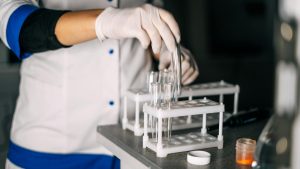
The first reason a failure causes such a significant delay is the nature of laboratory science. Unlike a home inspector who gives you a report on the spot, a NJDEP-certified laboratory requires time.
- Standard Turnaround: Most certified labs in New Jersey take 5 to 10 business days to process a full PWTA panel. This is because certain tests, like those for Volatile Organic Compounds (VOCs) or radiologicals (Uranium and Gross Alpha), require complex chemical extractions that cannot be rushed.
- The “Wait and See” Period: If your initial test fails, you don’t just lose those first 10 days; you also have to factor in the time it takes to diagnose the problem and schedule a technician for services.
When you add up the time for the initial test, the remediation, and the required re-test, it is easy to see how a simple bacterial failure can push your closing date back by 14 to 21 days.
Common “Closers-Killers”: The Top Reasons for Failure
In various New Jersey locations, there are specific contaminants that tend to trigger these delays. Knowing what is common in your area can help you stay ahead of the curve.
- Total Coliform Bacteria: This is the most common reason for a failed test. It signals that surface water or insects have breached the well seal. It requires a “shock chlorination” of the well, followed by a period of flushing and a re-test.
- Arsenic: Common in the “Arsenic Belt” of Central and Northern NJ. Because the state limit is a strict 5 $\mu g/L$, many wells fail by only a small margin, yet they still require a full remediation system.
- Gross Alpha & Uranium: In counties like Bergen and Morris, radioactive elements are a frequent issue. Installing the specialized ion-exchange resins needed to remove these elements can take time to order and set up.
- PFAS (“Forever Chemicals”): Since being added to the mandatory list in 2021, PFOA and PFOS have become major causes for closing delays, often requiring high-capacity carbon filtration systems.
The Remediation Trap: It’s Not Just a Quick Fix
When a well fails, the “fix” isn’t always as simple as pouring bleach down the pipe. For chemical or mineral failures, you need to install a treatment system. This introduces a new set of delays:
- System Design: A professional needs to review the lab results to ensure the system is sized correctly for the home’s water usage.
- Permitting: Some municipalities require plumbing permits for the installation of whole-house filtration systems, which can add days of administrative waiting.
- Flushing and Stabilization: After a system like an acid neutralizer or a chlorinator is installed, it needs to run for several days to “stabilize” before a laboratory technician can come back to take a passing sample.
If you are a seller who hasn’t stayed on top of your maintenance, you may find that your well casing or pump also needs repairs before a filter can even be installed, further compounding the delay.
The “Raw Water” Rule and Re-Testing
A common point of confusion in New Jersey is the “raw water” requirement. The PWTA mandates that the initial test be taken from the untreated water source. This means even if you have a filter, the lab must bypass it to see what is in the ground.
If the raw water fails for a primary health concern (like Arsenic or Lead), the buyer will typically demand a “Post-Treatment” test. This proves that the new or existing filtration system is actually doing its job. Because the state and the lenders require certified proof of this “Pass,” you are once again at the mercy of the lab’s 5-to-10-day turnaround for the final report.
How to Avoid the Closing Day Crisis
The best way to handle a well water test is to treat it as the very first item on your “To-Do” list, not the last.
- Test Before You List: Smart sellers order a PWTA test before the house even hits the market. This gives you months, not days, to handle any remediation privately.
- Review the “Blog” Knowledge: Our blog frequently covers the latest shifts in NJDEP regulations, helping you understand which new contaminants (like 1,2,3-TCP) might affect your sale.
- Don’t Settle for “DIY”: Home test kits are not valid for real estate transfers. Only a NJDEP-certified lab can provide the documentation required by law.
The Buyer’s Perspective: Why They Won’t Budge
From a buyer’s standpoint, a failed well test is a non-negotiable safety issue. Most mortgage lenders will not fund a loan for a home with a “failing” health-based water report. This means that even if the buyer is willing to take the risk, the bank isn’t.
At Olympian Well Water Testing, we often act as the neutral third party that provides the data needed to keep the conversation moving. We understand that behind every lab report is a family waiting to move into their new home.
Next Steps for Sellers and Agents
If you are currently under contract or about to list your home, do not leave your water quality to chance. A proactive approach is the only way to guarantee a smooth transition.
- Schedule Your Test Today: Don’t wait for the inspection period.
- Inspect Your Well Head: Ensure the cap is tight and the casing is at least 12 inches above the ground to prevent bacterial ingress.
- Gather Your Records: Have your previous test results and maintenance logs ready for the buyer’s review.