
In New Jersey, a real estate transaction involving a property with a private well is more than just a negotiation of price and closing dates—it is a matter of public health. Since the enactment of the Private Well Testing Act (PWTA) in 2002, the state has required a comprehensive water quality analysis before any title can transfer.
For many sellers, this requirement feels like a stressful hurdle. For buyers, it’s a vital piece of consumer protection. Whether you are listing a home in the Highlands or purchasing a sprawling estate in the Pine Barrens, knowing exactly what to expect from your pre-sale well test can prevent delays, save money, and ensure that the “clear” water in the home is truly safe to drink.
The Legal Requirement: What is the NJ PWTA?
The New Jersey Private Well Testing Act (PWTA) is a consumer information law. Its primary goal is to ensure that both the buyer and the seller are fully aware of the water quality before the sale is finalized.
Unlike municipal water, which is tested and treated by a utility company, a private well is the sole responsibility of the property owner. The PWTA mandates that the water be tested for a specific list of contaminants, and both parties must sign a certification confirming they have reviewed the results. Without this certified report, the closing cannot legally proceed.
Step 1: Scheduling and Sampling Protocols
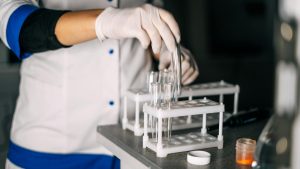
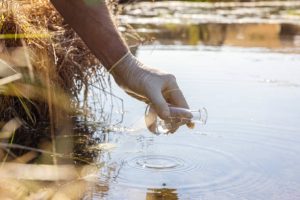
The process begins with hiring a NJDEP-certified laboratory. It is important to note that you cannot collect the samples yourself. To maintain a “chain of custody” and ensure the results are untampered with, the samples must be collected by an employee or authorized representative of the lab.
What the sampler will do:
- Identify the Tap: Samples are typically taken from a cold, non-aerated kitchen or bathroom faucet.
- The “Raw Water” Rule: The PWTA requires that the water be tested in its “raw” state. If the home has a filtration system, the sampler must bypass it to take a sample directly from the well. This tells the buyer what is actually in the ground, regardless of the current treatment.
- Testing for pH: Because pH levels can change quickly once water is exposed to air, the sampler will often perform a field test for pH on-site.
For more information on the technical side of these collections, you can view our services page.
Step 2: Understanding the Parameters
The list of what is tested depends heavily on the property’s location. While some contaminants are tested statewide, others are county-specific based on local geology and industrial history.
Statewide Mandatory Parameters:
- Bacteriological: Total Coliform (and E. coli if coliform is present).
- Chemical: Nitrates, Lead, and Volatile Organic Compounds (VOCs).
- Secondary: Iron, Manganese, and pH.
- PFAS: As of 2021, testing for PFOA, PFOS, and PFNA is required statewide.
County-Specific Parameters: Depending on your county, you may also be required to test for:
- Arsenic: Required statewide but has specific local implications in the “Arsenic Belt.”
- Mercury: Primarily required in southern counties like Atlantic or Ocean.
- Uranium & Gross Alpha: Required in northern counties including Bergen, Essex, Morris, and Union.
For a deep dive into these specific contaminants, our blog offers regional guides that explain why these minerals appear in certain NJ zip codes.
Step 3: Interpreting the Report
About 5 to 10 business days after the samples are taken, the lab will issue the New Jersey Private Well Water Test Reporting Form. This standardized document compares your well’s results against the Maximum Contaminant Levels (MCLs) set by the Environmental Protection Agency (EPA) and the state.
The “Pass/Fail” Dynamic:
- Primary Contaminants: If the well exceeds the MCL for a primary contaminant (like Lead, Arsenic, or E. coli), it is considered a health-based “failure.”
- Secondary Contaminants: If the well exceeds limits for Iron or Manganese, it is considered an aesthetic issue. While it doesn’t always “fail” the test in terms of safety, it often leads to negotiations regarding a water softener or iron filter.
Step 4: Remediation and Negotiation
If the report shows a failure, don’t panic. Almost every water quality issue in New Jersey can be solved with modern technology. However, this is where the real estate negotiation begins.
Who pays for the fix? The PWTA does not mandate who pays for remediation; it only mandates that the test be done. Typically, the seller pays for the initial test and the buyer may request that the seller install a treatment system to bring the water into compliance. Common fixes include:
- UV Lights: For bacterial issues.
- Acid Neutralizers: For low pH.
- Reverse Osmosis: For arsenic or lead.
- Carbon Filtration: For PFAS and VOCs.
Once a system is installed, a re-test must be performed to prove that the water now meets state standards. Keeping up with regular maintenance on these systems is crucial for the new homeowner.
Timeline and Tips for a Smooth Closing
To ensure your NJ real estate transaction stays on track, keep these tips in mind:
- Test Early: Don’t wait until the week before closing. If you discover a problem with uranium or PFAS, it can take weeks to design, install, and re-test a system.
- Check the “Recent” Rule: Most PWTA results are valid for one year, except for coliform, which is only valid for six months. Ensure your report won’t expire before the closing date.
- Hire Local Experts: At Olympian Well Water Testing, we understand the specific nuances of NJ’s mandatory reporting forms and the strict laboratory protocols required for a legal transfer.
Conclusion: Knowledge is the Ultimate Closing Tool
A pre-sale well test should not be viewed as a threat to a deal, but as a foundation of trust. For the seller, it provides a clean bill of health for the property. For the buyer, it provides peace of mind that their new home offers water that is safe for their family to drink.
By understanding the requirements of the PWTA and being proactive about the results, you can turn a potential “closing-day surprise” into a smooth, transparent transition.