
For many homeowners in the more suburban and wooded stretches of Essex County—areas like North Caldwell, Livingston, and West Eaton—the private well is a symbol of self-sufficiency. There is a common belief among residents that if the water is cold, clear, and refreshing to the taste, it must be pure.
However, a recent case study involving an Essex County family has shattered this illusion. Despite the water tasting “perfect” for years, a routine laboratory analysis revealed a significant failure for Total Coliform bacteria. This incident highlights the most dangerous truth about well water: your senses are not a reliable defense against microbial contamination.
In the world of water safety, “tasting fine” is not the same as being “safe.”
The Deception of the Senses: Why Bacteria is Invisible
The homeowner in this Essex County case was shocked by the results. “We drink this water every day,” they remarked. “It has no smell, no cloudiness, and it tastes better than the bottled water we buy at the store.”
Their surprise is understandable but scientifically misplaced. Most pathogenic bacteria, including the coliform group and even E. coli, do not produce a noticeable flavor, odor, or color at the concentrations typically found in well water. Unlike iron (which tastes metallic) or sulfur (which smells like rotten eggs), bacteria are microscopic “hitchhikers.”
When a well fails for bacteria, it isn’t because the water has turned into “sewage.” It means the protective barrier between the surface environment and the aquifer has been breached. Even in a high-end location like Essex County, where properties are meticulously kept, the ground beneath our feet is teeming with microscopic life that only laboratory-grade equipment can detect.
Understanding the “Indicator”: What Total Coliform Really Means
In New Jersey, the Private Well Testing Act (PWTA) requires testing for Total Coliform. It is important to understand that coliform bacteria are considered “indicator organisms.”
Most coliform bacteria do not cause disease themselves. They are common in the environment—found in soil, decaying vegetation, and surface water. However, their presence in a deep well is a “red flag.” It indicates that surface water is finding its way into the well system. If the harmless soil bacteria can get in, then more dangerous pathogens—such as viruses, parasites, or E. coli—could potentially follow the same path.
According to the Environmental Protection Agency (EPA), any presence of coliform in a 100ml sample is a failure. There is no “safe” level of bacteria in a potable water supply.
The Essex County Context: Why Local Wells Fail
Essex County presents a unique set of challenges for well owners. The geography varies from the volcanic rock of the Watchung Mountains to the silt-heavy lowlands.
1. The Watchung Influence In areas like Cedar Grove and Upper Montclair, wells are often drilled into fractured bedrock. While this provides a steady supply of water, those fractures can act as expressways for surface runoff. If a heavy rainstorm hits, water can move rapidly from the surface into the well column before the soil has a chance to naturally filter out microbes.
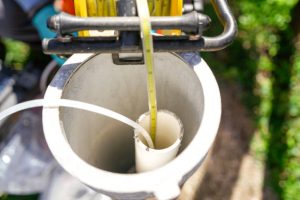
2. Aging Infrastructure Essex County is home to many historic estates. While the homes are beautiful, the well heads are often decades old. Over time, the grout seal that surrounds the well casing can shrink or crack. This allows insects, rodents, or contaminated rainwater to seep down the outside of the pipe and directly into the drinking water.
3. Suburban Density Even in affluent neighborhoods, the density of septic systems and older sewer lines in Essex County increases the “bio-load” on the soil. A well that was safe 30 years ago may now be vulnerable as the surrounding environment has changed. This makes regular maintenance and inspection of the well cap and seal more important than ever.
The Risks of the “Taste Test” Mentality
The “taste test” is perhaps the most dangerous myth in homeownership. By the time bacteria change the taste of water, the concentration would have to be astronomically high—well beyond the point of causing a public health crisis.
For the Essex County family, the “fine-tasting” water was a hidden liability. While healthy adults might not notice a few coliform units, the risk is significantly higher for:
- Infants and Children: Their immune systems are still developing.
- The Elderly: Who may have reduced resistance to gastrointestinal distress.
- Immunocompromised Individuals: For whom a minor bacterial infection can turn into a major medical emergency.
This is a recurring theme on our blog: the importance of data over intuition. You wouldn’t check your home’s radon levels by “smelling the air,” and you shouldn’t check your water’s safety by “tasting the tap.”
The Solution: Shock Chlorination and Beyond
When the Essex County well failed, the homeowners immediately sought professional services. The remediation process for bacteria is standardized but must be done with precision.
- Inspection: First, a technician must ensure the well head is physically sound. If the cap is cracked or the casing is too low to the ground, the bacteria will simply return after the next rain.
- Shock Chlorination: This involves introducing a high concentration of chlorine (bleach) into the well and the entire home plumbing system. It sits for 12–24 hours to kill any lingering colonies.
- Flushing: The system is flushed until the chlorine smell is gone.
- The Retest: This is the most critical step. You cannot assume the bacteria are gone. A follow-up test must be conducted 3 to 7 days after the chlorine has been cleared to ensure the well is truly clean.
In some cases, if a well continues to fail despite shock chlorination, a more permanent solution like a Ultraviolet (UV) Light System is installed. This system uses specialized light frequencies to scramble the DNA of bacteria as they pass through the pipe, ensuring they cannot reproduce or cause harm.
Steps for Essex County Homeowners
If you haven’t had your well tested in the last twelve months, do not rely on your taste buds. Follow this safety protocol:
- Order a Bacteria Test: Ensure it includes Total Coliform and E. coli.
- Check Your Well Head: Ensure the casing extends at least 12 inches above the ground and that the cap is a “sanitary” type with a screened vent.
- Test After Major Work: If you’ve had a pump replaced or any plumbing work done, the system was opened to the air and should be tested.
- Consult the Pros: If you are buying or selling a home, use our contact page to schedule an official NJ PWTA test.
Conclusion: Purity is Verified, Not Tasted
The Essex County family whose water tasted fine but failed for bacteria eventually cleared their system and regained their peace of mind. But the experience changed how they view their home. They realized that the “purity” they thought they were enjoying was merely an absence of symptoms, not an absence of risk.
Your well is a direct portal to the earth. While the water it provides is a gift, it is a gift that requires constant verification. In a county as beautiful and developed as Essex, don’t let a “good taste” lull you into a false sense of security. Trust the lab, trust the science, and ensure that your family’s water is as safe as it is delicious.
For more information on the standards for private wells in New Jersey, you can visit the New Jersey Department of Health resources.