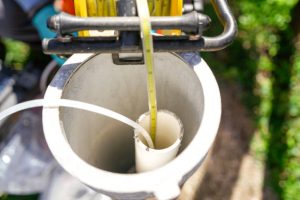

Owning a home in Fort Lee, New Jersey, offers a unique blend of suburban tranquility and proximity to the bustling energy of Manhattan. For many residents, particularly those in the more secluded or historic pockets of the borough, private wells serve as the primary source of life-sustaining water. We often view these wells as symbols of independence and purity. However, a recent case study involving a Fort Lee home has highlighted a surprising and often overlooked reality: even routine maintenance can lead to unexpected water quality failures, specifically the presence of coliform bacteria.
In this instance, a homeowner performed what they believed was standard upkeep on their well system. To their shock, the follow-up laboratory results returned a positive hit for coliform. This scenario serves as a vital reminder that the “health” of a well is a delicate balance, and any intervention—no matter how well-intentioned—requires professional oversight and precise testing.
The Incident: Why Routine Maintenance Led to a Failed Test
The homeowner in question had lived in Fort Lee for over a decade. They were diligent about their property, scheduling regular pump inspections and ensuring the well cap was secure. Following a minor repair to the pressure tank and the replacement of a seal, the system was closed back up. Under the impression that the water was safer than ever, the owner ordered a standard test suite.
The results were startling: Coliform Bacteria: Present.
How does this happen? When a well system is opened for maintenance, the internal environment is exposed to the outside world. Tools, replacement parts, and even the air itself can introduce microorganisms into the column. In this Fort Lee case, it was likely that a small amount of surface soil or bacteria on a technician’s glove bypassed the sanitary seal during the repair. Without a rigorous disinfection protocol following the work, the bacteria began to colonize the distribution lines.
Understanding Coliform Bacteria in Well Water
To many, the word “bacteria” immediately triggers images of severe illness. While some bacteria are indeed dangerous, the “Coliform” group is actually a broad category. It includes bacteria that are found in the digestive tracts of animals and humans, but also those found in soil and vegetation.
By themselves, most coliform bacteria do not cause disease. However, they are what scientists call “indicator organisms.” Their presence in a Fort Lee water supply suggests that the well is vulnerable to outside contamination. If coliform can get in, then more dangerous pathogens—such as E. coli or viruses—could potentially find the same pathway. According to the Environmental Protection Agency (EPA), any presence of coliform in drinking water is a signal that the system’s integrity has been compromised and requires immediate attention.
The Local Impact: Fort Lee’s Unique Geography
Fort Lee sits atop the Palisades, a line of steep cliffs along the west side of the Hudson River. The geology here consists largely of Diabase rock. While this provides a sturdy foundation for the skyscrapers near the George Washington Bridge, it creates a complex environment for groundwater.
Fissures in the bedrock can allow surface water to travel rapidly into the aquifer. When a homeowner in this location opens their well for service, they are dealing with a water source that is already influenced by urban runoff and high-density living. This makes the post-maintenance testing phase even more critical. In a densely populated area like Bergen County, the margin for error regarding groundwater safety is slim.
The Importance of Professional Post-Maintenance Testing
Many homeowners assume that if the water looks clear and smells fine after a repair, it is safe to drink. This is a dangerous misconception. Bacteria like coliform are invisible, odorless, and tasteless.
The Fort Lee incident underscores why specialized services are necessary. A professional water tester doesn’t just pull a sample; they understand the “plumbing logic” of the home. They know to flush the lines to remove stagnant water and how to take a sterile sample that isn’t contaminated by the kitchen faucet itself.
After any maintenance work—whether it’s a pump replacement, a pipe repair, or a deepening of the well—a “shock chlorination” is usually recommended, followed by a professional test. In the case of our Fort Lee resident, the failure to properly disinfect the system after the seal was replaced allowed the bacteria to linger in the “dead legs” of the plumbing.
Steps to Take If Your Well Fails a Coliform Test
If you find yourself in a situation similar to this Fort Lee homeowner, do not panic, but do take immediate action.
- Stop Consumption: Switch to bottled water for drinking, cooking, and brushing teeth.
- Inspect the Wellhead: Ensure the casing is not cracked and the cap is a “sanitary” type that prevents insects and vermin from entering.
- Shock Chlorination: This involves introducing a concentrated chlorine solution into the well to kill any lingering bacteria. This should ideally be performed by a professional to ensure the concentration is high enough to be effective but not so high that it damages the system.
- Retest: This is the most crucial step. You cannot assume the chlorine worked. A follow-up test must be conducted to confirm the absence of bacteria.
For those residing in Northern New Jersey, reaching out to a local expert through a contact page is the fastest way to get a technician on-site to assess the situation.
The Value of a Comprehensive Water Health Strategy
The Fort Lee case wasn’t a failure of the well itself, but a failure of the process. Maintaining a private well is an ongoing responsibility that goes beyond mechanical repairs. It involves a commitment to biological safety.
The Olympian Well Water Testing philosophy emphasizes that water quality is a moving target. Seasonal changes, local construction, and, as we’ve seen, routine maintenance can all alter the safety of your tap water. By treating water testing as a standard part of home maintenance—rather than an afterthought—homeowners can avoid the stress of a failed test and the potential health risks associated with contaminated water.
Common Myths About Well Water Maintenance
Myth 1: “My well is 300 feet deep; bacteria can’t get down there.”
While deep wells are generally better protected from surface contamination, the well casing acts as a straw. If the top of that straw is contaminated during maintenance, the depth of the water source doesn’t matter; the bacteria will be introduced directly into the column.
Myth 2: “I used bleach, so it’s fine.”
Household bleach can be used for disinfection, but without knowing the volume of water in the well and the flow rate, it is very easy to under-dose (leaving bacteria alive) or over-dose (corroding your pipes and pump).
Myth 3: “I’ve been drinking this water for years and I’m not sick.”
The human body can sometimes build a tolerance to low levels of certain bacteria, but that doesn’t make the water “safe.” Furthermore, guests, children, or the elderly who visit your Fort Lee home may not have that same resistance and could become ill from the same water you drink daily.
Protecting Your Property Value in Fort Lee
Beyond health concerns, water quality is a significant factor in property value. In New Jersey, the Private Well Testing Act (PWTA) requires that for any contract of sale for real property, the potable water supply must be tested. If you are a Fort Lee resident considering selling your home in the future, a history of failed tests or neglected maintenance can complicate the closing process.
Staying ahead of these issues by reading up on the latest water quality trends on a dedicated blog can help you maintain a “clean bill of health” for your home’s most vital utility.
Conclusion: Vigilance is the Key to Purity
The story of the Fort Lee home that failed for coliform after routine maintenance is a cautionary tale, but it is also an empowering one. It reminds us that we have the tools and the technology to identify and rectify these issues before they become health crises.
Your well is more than just a hole in the ground; it is a complex system that requires a marriage of mechanical integrity and biological purity. Whether you are performing a simple seal replacement or a major pump overhaul, remember that the job isn’t finished until the lab results come back clean.
For homeowners in the Fort Lee area and throughout Bergen County, the lesson is clear: trust the professionals, prioritize the post-maintenance test, and never take the safety of your water for granted. The peace of mind that comes with a “Negative” coliform result is worth every bit of the effort. For more information on how to safeguard your home, visit the New Jersey Department of Environmental Protection for guidelines on private well safety and regulations.